
What Not to Say to an Insurance Adjuster After an Accident
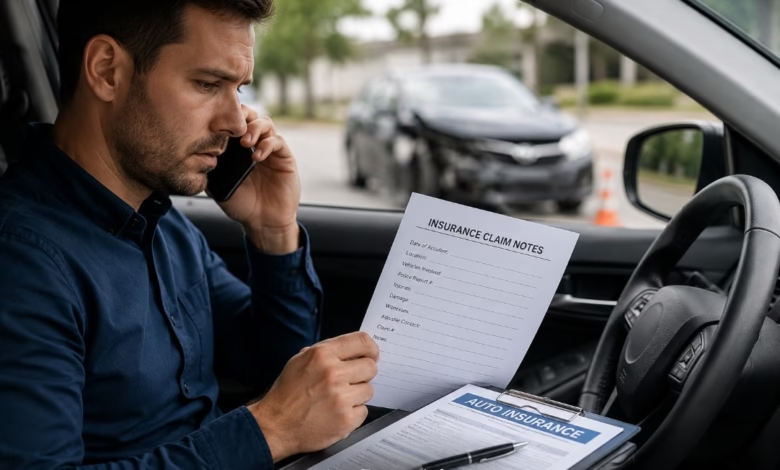
After a car accident, an insurance adjuster may call sooner than you expect. The conversation can feel routine, but your words may become part of the claim file. A rushed apology, a guess about fault, a casual “I’m fine,” or an early agreement to settle can create problems later. This guide explains what not to say to an insurance adjuster after an accident, what to say instead, what documents to keep, and when it may be smart to get legal help before giving more details.
Short answer
Do not say anything that sounds like an admission of fault, a final medical conclusion, a guess, or an agreement to settle before you understand the full claim. The safest approach is to stay polite, factual and brief.
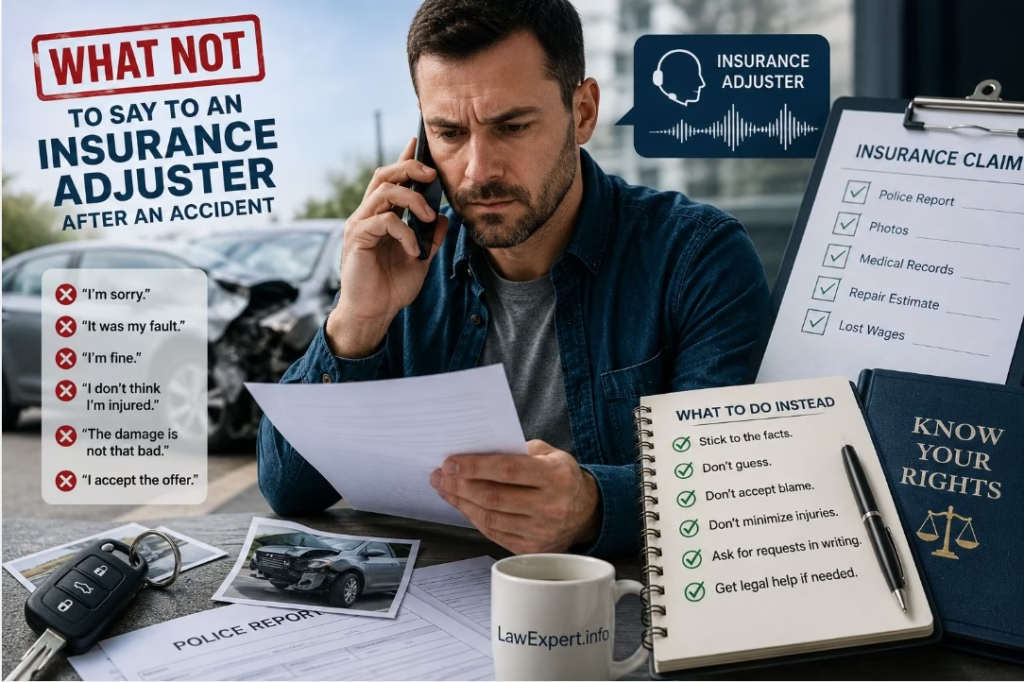
After an accident, avoid saying:
- “It was my fault.”
- “I’m sorry I caused the accident.”
- “I’m fine.”
- “I do not think I am injured.”
- “The damage is not that bad.”
- “I was probably speeding.”
- “I guess I could have avoided it.”
- “I accept the offer.”
- “That amount is enough.”
- “You can record me right now” without understanding whether a recorded statement is required.
- “You can have all my medical records” without reviewing the authorization.
A safer answer is: “I want to cooperate, but I am still gathering information. I can confirm basic facts such as my name, contact information, the date and location of the accident, and the vehicles involved. I am not ready to discuss fault, injuries or settlement today.”
This answer does not hide information. It prevents guessing. It also keeps the claim focused on documents, evidence and verified facts rather than rushed statements made while you are stressed.
Why the adjuster conversation matters
A car accident claim is usually built from many pieces of information: police reports, photos, repair estimates, medical records, witness details, claim notes, phone calls, emails, app records, policy language and settlement documents. The insurance adjuster’s call is one part of that record.
If you say something incomplete or inaccurate early in the claim, the insurer may compare that statement with later evidence. For example, if you say you are not injured and then you seek medical care two days later, the insurer may question whether the injury is related to the crash. If you say the damage looks minor and the repair shop later finds hidden damage, the insurer may still point to your early statement. If you guess about speed, lane position or fault, that guess may create confusion even when the evidence later shows something different.
This does not mean every insurance adjuster is dishonest. Many adjusters are professional, and many claims are handled normally. But the adjuster is not your personal adviser. The adjuster is evaluating the claim for an insurance company. Your responsibility is to protect your health, your vehicle, your finances and your legal rights.
Right after an accident, people often speak too casually. They apologize because they are polite. They say they are fine because they are embarrassed or full of adrenaline. They agree to a quick offer because they need transportation. They describe the crash before seeing the police report, photos or video. These are normal human reactions, but they can make the claim harder later.
If you need a broader crash checklist, you can also read LawExpert.info’s guide on what to do after a car accident when it was not your fault. This article focuses specifically on how to handle communication with the insurance adjuster.
Know who is calling before you answer questions
Before discussing details, identify the caller. Ask for the adjuster’s name, company, phone number, email address, claim number and the name of the insured person or policy they represent.
This matters because there is a difference between your own insurance company and the other driver’s insurance company. Your own policy may require you to report the accident and cooperate with the claim process. The other driver’s insurance company does not represent you. It is investigating a claim involving its insured.
Ask these questions at the start of the call:
- What is your full name and direct phone number?
- Which insurance company do you represent?
- Are you calling about my policy or another driver’s policy?
- What is the claim number?
- What information are you requesting today?
- Are you asking for a recorded statement?
- Can you send your request in writing?
If you are not sure the call is legitimate, do not provide personal information. End the call politely and contact the insurance company through a verified phone number from your policy, claim letter or official website.
Phrases not to say to an insurance adjuster
The most dangerous phrases are usually not dramatic. They are often short, polite or uncertain. They become risky because they can be interpreted as fault admissions, injury denials, damage minimization or settlement agreement.
“I’m sorry”
Many people say “I’m sorry” automatically after a crash. They may simply mean, “I’m sorry this happened.” The problem is that the phrase can be treated as an admission. A safer phrase is: “I hope everyone is okay.” That shows concern without accepting blame.
“It was my fault”
Fault can depend on traffic signals, speed, lane position, witness statements, dashcam footage, road conditions, police findings and state law. Do not make a legal conclusion during a phone call. You can describe facts you know, but avoid deciding fault yourself.
“I did not see the other car”
This can sound like inattention, even when the other driver changed lanes suddenly, ran a red light, failed to yield or drove without headlights. A safer answer is: “I am still reviewing what happened and waiting for the police report and other information.”
“I’m fine”
After a crash, adrenaline can hide pain. Some symptoms appear later, including neck pain, back pain, headaches, dizziness, shoulder pain, numbness or stiffness. If you say you are fine too early, the insurer may question later treatment. A better answer is: “I am still monitoring my symptoms.”
“I do not think I am injured”
Do not give a final medical conclusion unless you are certain and have completed any necessary evaluation. You can say: “I have not completed medical evaluation yet,” or “I am following medical advice.”
“The damage is not that bad”
Visible damage does not always show the full repair cost. Modern vehicles may have sensor damage, alignment problems, frame issues, electronic issues or hidden structural damage. Say: “The vehicle needs a full inspection and repair estimate.”
“I was probably speeding”
Do not guess about speed. Words like “probably,” “maybe,” “I think,” and “I guess” can create problems. If you do not know, say you do not know.
“I accept the offer”
A settlement may require a release. A release can end your right to ask for more money later. Do not accept an offer until you know whether it is final, what claims it covers and whether all damage, medical bills and lost wages are understood.
“You can have all my records”
Medical authorization forms can be broad. They may allow access to records that are not limited to the accident. Read any authorization carefully before signing it. In some situations, it is better to provide relevant records in a controlled way.
What to say instead
You do not need to be rude or silent. You need to be careful. The goal is to cooperate with legitimate claim handling while avoiding guesses and final conclusions.
Use wording like this:
- “I can confirm the basic accident information.”
- “I am still gathering documents.”
- “I have not reviewed the police report yet.”
- “I do not know the answer to that right now.”
- “The vehicle has not been fully inspected yet.”
- “I am still evaluating my symptoms.”
- “Please send that request in writing.”
- “I would like time to review the offer before responding.”
- “I am not prepared to discuss fault today.”
- “I do not want to give a recorded statement until I understand whether it is required.”
These phrases are useful because they are honest and limited. They do not exaggerate your claim. They do not refuse cooperation. They simply prevent the adjuster from turning a quick phone call into a final statement about fault, injuries or settlement value.
If the adjuster asks for your version of the crash, stay with facts. For example, you may be able to say the date, time, location, direction of travel and where the impact occurred. Avoid opinions such as “I had no responsibility,” “the other driver was careless,” or “I could not have done anything.” The evidence should speak for itself whenever possible.
If the adjuster asks whether you are injured, avoid both exaggeration and minimization. A balanced answer is: “I felt symptoms after the accident and I am seeking medical evaluation,” or “I am still monitoring symptoms and treatment needs.”
Recorded statements
An adjuster may ask for a recorded statement. The request may sound routine, but a recorded statement can become important later. It may be transcribed, compared with medical records, compared with deposition testimony, or used to challenge inconsistencies.
Before agreeing to a recorded statement, ask:
- Which insurance company are you with?
- Are you my insurance company or the other driver’s insurance company?
- Are you saying my policy requires this recorded statement?
- Can the statement be scheduled for a later date?
- Can you send the request in writing?
If the adjuster works for your own insurer, your policy may require cooperation. Even then, you can usually ask to schedule the statement at a reasonable time so you can review your notes and documents. If the adjuster works for the other driver’s insurer, be more cautious. You may want legal advice before giving a recorded statement, especially if there are injuries, disputed fault, unclear coverage or significant damages.
A careful response is: “I am willing to cooperate with the claim process, but I am not giving a recorded statement today. Please send your request in writing so I can review it.”
If you already gave a recorded statement and later realized part of it was wrong, write down what you said, what was inaccurate, and why. Do not send a rushed correction if the claim is serious. A correction should be clear, factual and supported by evidence.
Fault, injuries and vehicle damage
Most claim disputes come from three areas: fault, injuries and damages. These are the areas where careful wording matters most.
Talking about fault
Fault is not just a feeling. It may involve police findings, witnesses, photos, traffic signals, road markings, vehicle positions, speed, state law and comparative fault rules. Do not accept blame during an early phone call.
Instead of saying “It was my fault,” say: “I am not prepared to make a fault conclusion. I can provide the basic facts I know.”
Instead of saying “I could have avoided it,” say: “I am still reviewing what happened.”
Instead of saying “I did not see them,” say: “The impact happened at the intersection, and I am waiting for more information.”
Talking about injuries
Do not self-diagnose. Do not say you are fine just to be polite. Do not exaggerate pain either. The safest answer is accurate and open: “I am still evaluating my symptoms and treatment needs.”
If you already saw a doctor, you can say: “I received medical evaluation and I am following medical instructions.” You do not need to give a full medical history during a quick call.
Be careful with prior injuries. A prior condition does not automatically destroy a claim, but insurers may use prior medical history to argue that symptoms were not caused by the crash. If asked about old injuries, do not guess. Say you will provide relevant information when appropriate.
Talking about vehicle damage
Do not say the vehicle damage is minor before inspection. A repair shop may later find hidden damage. Sensors, alignment, frame components, airbags and electronics can be expensive even when the exterior damage looks manageable.
A better answer is: “The vehicle is being inspected, and I am waiting for the repair estimate.”
If the insurer sends an estimate you disagree with, ask for a written explanation. Ask whether supplemental damage can be reviewed if the repair shop finds additional problems. Keep photos before repairs begin.
Early settlement offers
Some claims settle quickly because they are simple. But quick does not always mean fair. An early offer may come before medical treatment is complete, before hidden vehicle damage is found, before lost wages are calculated, or before you understand what the release covers.
Do not say:
- “That sounds fair.”
- “I just want this over.”
- “I will take it.”
- “Send me the check.”
- “I accept the settlement.”
Instead, say: “Please send the offer in writing. I need to review whether it is final, what claims it covers, and whether a release is required.”
Before accepting money, understand whether the payment covers property damage only, bodily injury only, medical payments, lost wages, diminished value, rental costs or all claims. Also ask whether the settlement is final. If you sign a final release, you may lose the right to ask for more money later, even if new symptoms or bills appear.
If the adjuster says the offer has a deadline, ask for the deadline in writing. Some deadlines may be real. Others may be negotiation pressure. Either way, you should not make a final decision without understanding the consequences.
Documents to keep after the call
Good documentation is often stronger than memory. After every adjuster call, write down the date, time, adjuster’s name, company, claim number and what was discussed. Save emails and letters. Keep your records organized.
Important documents may include:
- Police report information
- Photos and videos from the scene
- Photos of vehicle damage
- Witness names and contact information
- Repair estimates
- Towing and storage bills
- Rental car receipts
- Medical visit records
- Prescription receipts
- Work excuse notes
- Lost wage records
- Emails from the insurer
- Settlement offers
- Release forms
- Medical authorization forms
If the adjuster promises something important, ask for written confirmation. For example, if the adjuster says rental coverage applies, a payment is being issued, a supplemental estimate will be reviewed, or a deadline is extended, ask for an email confirming it.
Organized records also help if you later need to speak with an attorney, file a complaint with a state insurance department, challenge a claim decision or explain why a settlement offer does not reflect the full loss.
Red flags that may require legal help
Not every car accident claim needs a lawyer. A small property damage claim with no injury may be handled directly with the insurer. But some situations deserve caution.
Consider legal help if:
- You were injured or symptoms are getting worse.
- Fault is disputed.
- The adjuster asks for a broad recorded statement.
- The insurer sends a broad medical authorization.
- The other driver is uninsured or underinsured.
- The accident involved a commercial vehicle, rideshare driver or delivery driver.
- A child was injured.
- The insurer offers a quick settlement before treatment is complete.
- The repair estimate seems too low.
- The insurer delays or refuses to explain its decision.
- You are asked to sign a release you do not understand.
If you are unsure whether attorney help makes sense, LawExpert.info also has a guide on what to know before hiring a car accident lawyer. The point is not to make every claim complicated. The point is to avoid giving up rights before you understand the facts, policy coverage and possible value of the claim.
Sample script for an adjuster call
You can use this simple script if an adjuster calls after an accident:
“Thank you for calling. Before we discuss the claim, please give me your name, company, phone number, email address, claim number and the name of the policy or person you represent. I can confirm basic information today, but I am still gathering documents. I am not ready to discuss fault, injuries or settlement. If you need documents, a recorded statement or a signed form, please send the request in writing so I can review it.”
If the adjuster asks whether you are injured, you can say:
“I am still evaluating my symptoms and treatment needs. I do not want to give a final medical statement today.”
If the adjuster asks whether you caused the accident, you can say:
“I am not prepared to make a fault conclusion. I can confirm the basic facts I know, and I am waiting for the police report and other information.”
If the adjuster makes an offer, you can say:
“Please send the offer in writing and explain whether it is a final settlement, what claims it covers and whether a release is required. I need time to review it.”
These answers are calm, professional and clear. They do not make accusations. They do not hide facts. They simply keep you from guessing, minimizing injuries or accepting a settlement before the claim is ready.
Useful sources
Check current official sources before making decisions, because insurance rules, claim procedures, deadlines and consumer protections may vary by state, policy language and individual circumstances.
- National Association of Insurance Commissioners: What You Should Know About Filing an Auto Claim
- National Association of Insurance Commissioners: Auto Insurance Information for Consumers
- New York Department of Financial Services: Filing Claims Under Your Own Policy
- New York Department of Financial Services: How to Submit an Auto Claim
- Florida Department of Financial Services: Adjusters and Claim Handling
- California Department of Insurance: So You Have Had an Accident, What Is Next?
This article is for general informational purposes only and is not legal advice. Laws, deadlines, procedures, insurance duties, claim rules and available compensation may vary by state, policy language, insurer, accident facts and individual circumstances. If your situation may affect your money, health, vehicle, employment, legal rights or liability, consider speaking with a qualified attorney in your state.
Questions and answers
Do I have to talk to the insurance adjuster after an accident?
You may need to cooperate with your own insurance company under your policy, but you do not need to guess, accept blame or discuss settlement before you are ready. If the adjuster is from the other driver’s insurance company, be especially careful and ask for requests in writing.
Should I give a recorded statement to the insurance adjuster?
Do not agree automatically. Ask which insurance company the adjuster represents and whether your own policy requires a recorded statement. If injuries, disputed fault or serious damage are involved, consider legal advice before giving a recorded statement.
Is it bad to say I am sorry after a car accident?
It can be risky. You may mean it politely, but an insurer may treat it as an admission of fault. A safer phrase is: “I hope everyone is okay.”
What should I say if the adjuster asks if I am injured?
Be honest, but do not make final medical conclusions too early. You can say: “I am still evaluating my symptoms and treatment needs.” If you already received medical care, say that you are following medical advice.
Can my words to an adjuster be used against me?
Yes. Statements made during a claim call may become part of the claim file. If your later medical records, repair estimates or testimony are different from your early statement, the insurer may use that difference to question your claim.
What if I already said something wrong to the adjuster?
Write down what you said, when you said it and why it may have been incomplete or inaccurate. If the claim involves injuries, disputed fault or settlement pressure, speak with an attorney before sending a correction.
Should I accept the first settlement offer?
Not until you understand whether the offer is final, what claims it covers and whether you must sign a release. Early offers may arrive before the full medical picture or vehicle damage is known.
What documents should I keep after an accident claim call?
Keep call notes, emails, photos, police report information, repair estimates, medical records, rental receipts, towing bills, lost wage records, settlement offers and any release forms. Organized records can help if the claim becomes disputed.
Can I refuse to discuss fault with the adjuster?
You can avoid making legal conclusions about fault, especially before reviewing the police report, photos, witness information or video. A careful answer is: “I am not prepared to make a fault conclusion yet.”
When should I get legal help after talking to an adjuster?
Consider legal help if you were injured, fault is disputed, the insurer requests a broad medical authorization, the settlement offer seems low, the other driver is uninsured, or you are asked to sign a release you do not understand.
у своєму регіоні або по всьому світу
locally or worldwide