
Green Card Interview: What to Expect and How to Prepare

Receiving a green card interview notice can feel like a major step forward and a new source of anxiety at the same time. Applicants often worry about difficult questions, forgotten dates, missing documents or whether one inconsistent answer could result in a denial.
The interview is generally an opportunity for a U.S. Citizenship and Immigration Services officer to verify the application, review eligibility, clarify information and evaluate whether the applicant can adjust status to lawful permanent residence. In a family-based case, the officer may also examine whether the qualifying relationship is legally valid and genuine.
Preparation should focus on accuracy, organization and honesty—not on memorizing a script. Review everything filed with USCIS, collect updated evidence, identify mistakes before the appointment and be ready to explain facts clearly. The exact questions and outcome depend on the green card category, immigration history and individual case.
Who May Be Required to Attend a Green Card Interview?
Applicants applying for lawful permanent residence from inside the United States generally use the adjustment of status process and file Form I-485. USCIS may schedule an in-person interview at a field office before deciding the application.
USCIS may waive an interview in some cases, but an applicant should not assume that a waiver will occur. Interview decisions are made according to the circumstances of the case and current agency policy.
Family-based cases
In many family-based adjustment cases, both the applicant and the person who filed the immigrant petition should plan to attend unless USCIS provides different instructions.
Examples include:
- a U.S. citizen filing for a spouse;
- a lawful permanent resident filing for a spouse;
- a U.S. citizen filing for a parent;
- a U.S. citizen filing for an unmarried child;
- another qualifying family petitioner and beneficiary.
Derivative applicants may also be required to appear. The interview notice should identify who must attend.
Employment-based cases
An employment-based applicant may also receive an interview notice. The officer may review the qualifying employment, job offer, immigration history, admissibility and whether the applicant remains eligible under the employment-based category.
Other adjustment categories
Interviews may also occur in cases involving:
- asylees and refugees adjusting status;
- special immigrants;
- humanitarian categories;
- diversity visa applicants adjusting in the United States;
- other categories permitted by immigration law.
The appointment notice controls the date, time, location and people expected to attend. Do not rely only on general online descriptions of how interviews usually work.
Why USCIS Conducts Green Card Interviews
The interview allows the officer to review the applicant in person and resolve questions that may not be answered fully by the written submission.
The officer may use the interview to:
- confirm the applicant’s identity;
- review the information on Form I-485;
- verify supporting documents;
- update information that changed after filing;
- evaluate eligibility for adjustment of status;
- review possible grounds of inadmissibility;
- confirm the qualifying family or employment relationship;
- assess the credibility and consistency of answers;
- request additional evidence;
- correct mistakes in the application.
An interview is not automatically a sign that USCIS suspects fraud. Interviews are a normal part of many adjustment cases. However, the officer may examine potential problems when the file contains inconsistencies, missing evidence or a complicated immigration history.
The officer reviews the whole record
The interview is not limited to the most recent form. USCIS may compare current answers with:
- previous visa applications;
- prior immigration petitions;
- border or airport records;
- asylum or refugee filings;
- employment authorization applications;
- prior marriage-related filings;
- statements made to government officers;
- documents submitted by the petitioner or employer.
This is why applicants should review their complete immigration history rather than focusing only on the interview notice.
What to Check on the Interview Notice
When the notice arrives, review every part of it immediately.
- the applicant’s full name and identifying information;
- the date and time of the appointment;
- the USCIS field office address;
- which family members or petitioners must attend;
- which original documents are requested;
- whether an interpreter may be needed;
- whether special instructions apply;
- whether the notice lists documents not previously submitted.
Keep the original notice and bring it to the appointment. Save a copy with the case records.
Confirm that USCIS has the correct address
Applicants are generally required to report a change of address to USCIS. Updating an address with the Postal Service does not necessarily update the immigration case.
If the notice was delayed or sent to an old address, review the USCIS account and case information promptly. Missing an appointment because of an address problem can have serious consequences.
Plan transportation and arrival
Check travel time, parking, public transportation and building entry requirements. USCIS offices use security screening, and parking or entry can take longer than expected.
Do not arrive so late that you miss check-in. At the same time, field offices may restrict how early visitors can enter, so follow the notice and local office instructions.
What to Do Before the Green Card Interview
The best preparation begins with the exact application that USCIS received.
Review Form I-485, the underlying petition and every supporting form. If a lawyer or preparer filed the case, request a complete copy rather than relying on memory.
Check addresses, employment, travel, immigration status, marriages, children, organizations, arrests, citations and admissibility questions. Identify anything that is incomplete or incorrect.
Prepare a chronological list of residences, jobs, entries to the United States, departures, marriages and important case events. Use actual records instead of guessing.
Locate passports, birth certificates, marriage certificates, divorce judgments, name-change records and other originals requested in the notice.
Bring documents created after filing, including updated financial records, relationship evidence, immigration documents and records of major changes.
Make a list of arrests, immigration violations, prior denials, unauthorized employment, false statements, prior marriages or other facts that may require legal analysis.
Do not wait for the officer to discover a major discrepancy. Ask a qualified immigration attorney how and when the correction should be presented.
Review facts without memorizing artificial language. The goal is to understand the history well enough to answer naturally and accurately.
A careful statement that you do not remember an exact date may be more credible than an incorrect guess. Explain what you do know and offer the document that contains the precise information.
Documents to Bring to a Green Card Interview
The interview notice is the primary checklist. The following categories are commonly relevant, but not every item applies to every case.
Appointment and identity documents
- the original interview notice;
- current passport;
- expired passports containing U.S. visas or entry stamps;
- government-issued photo identification;
- employment authorization document, if issued;
- advance parole document, if issued;
- Form I-94 record, when applicable.
Immigration documents
- copies of all forms filed in the case;
- receipt notices and approval notices;
- prior immigration decisions;
- documents showing lawful entry or parole;
- records relating to prior removal or court proceedings;
- copies of prior visa applications when available.
Civil documents
- birth certificate;
- marriage certificate;
- divorce decrees or death certificates terminating prior marriages;
- legal name-change documents;
- adoption records when relevant;
- certified court dispositions for arrests or criminal cases;
- certified translations when required.
Financial sponsorship records
Depending on the category, bring updated evidence related to Form I-864, Affidavit of Support. This may include:
- recent federal tax documents;
- current employment verification;
- recent pay statements;
- evidence of assets when relied upon;
- joint sponsor documents;
- proof of the sponsor’s U.S. citizenship or permanent residence.
Copies and organization
Place originals and copies in separate labeled sections. Do not hand the officer a disorganized bag of papers. A simple binder or folder system can reduce confusion.
Create a one-page list showing what each section contains. This can help you locate a requested document without delaying the interview.
How to Prepare for a Marriage-Based Green Card Interview
In a marriage-based case, USCIS must determine whether the marriage is legally valid and was entered into in good faith rather than primarily to obtain an immigration benefit.
The officer may examine the couple’s shared life, financial arrangements, home, communication, family relationships and future plans.
Bring evidence created since filing
A marriage continues after the initial application is submitted. Updated evidence may be more persuasive than bringing only the same records USCIS already has.
- joint lease, deed or mortgage records;
- joint bank statements;
- joint credit accounts;
- insurance policies listing each other;
- joint federal or state tax records;
- utility or household bills;
- birth certificates of children together;
- travel records and reservations;
- photographs from different dates and events;
- correspondence showing a continuing relationship;
- records of shared memberships or subscriptions;
- estate planning or beneficiary documents;
- evidence of financial support and shared expenses;
- affidavits from people with personal knowledge, when useful.
No single document proves a marriage is genuine. Couples organize their finances differently. The evidence should present a consistent and believable picture of the actual relationship.
Photographs should have context
Do not bring hundreds of unexplained photographs. Select a reasonable collection showing different dates, locations, relatives, friends, holidays and ordinary life.
Label photographs with:
- the approximate date;
- the location;
- the people shown;
- the event or context.
Review the relationship timeline
Both spouses should understand the important events in their own relationship, including:
- how and when they met;
- how the relationship developed;
- when they decided to marry;
- the wedding arrangements;
- where they have lived;
- major trips and family events;
- how finances and household responsibilities are handled.
Small differences in memory are normal. Completely different accounts of major events may lead to additional questions.
USCIS is not testing whether spouses memorized the same script. Artificially rehearsed answers can be less convincing than honest answers expressed naturally.
Preparing for an Employment-Based Green Card Interview
Employment-based applicants should review the immigrant petition, Form I-485, job information and any supplements filed with the case.
The officer may ask about:
- the sponsoring employer;
- the offered position;
- job duties;
- work location;
- salary or compensation;
- education and experience;
- current employment;
- changes in employer or position;
- periods of unemployment;
- maintenance of immigration status;
- unauthorized employment;
- the applicant’s intention to accept the offered employment.
Bring current employment evidence
Possible documents include:
- a recent employment verification letter;
- recent pay statements;
- current job offer confirmation;
- Form I-485 Supplement J when applicable;
- records explaining employer or job changes;
- professional licenses;
- updated organizational or business information when relevant.
A job change may or may not affect eligibility, depending on timing, category, job similarity and other facts. Applicants should obtain legal advice before assuming that portability or another protection applies.
What Happens on the Day of the Interview?
The exact procedure differs by field office, but the appointment commonly includes several stages.
Security and check-in
Visitors may pass through security screening. Bring only necessary items and follow building rules regarding phones, cameras, food and other belongings.
At check-in, staff may request the appointment notice and identification. You may then wait until the case is called.
Meeting the officer
The officer may:
- verify identities;
- place the applicant under oath;
- review Form I-485 line by line or by section;
- ask questions about the petition and evidence;
- request original documents;
- make corrections to the application;
- ask for updated documents;
- discuss unresolved eligibility issues.
The applicant is normally placed under oath
The applicant must answer truthfully. A knowingly false statement to obtain an immigration benefit can create consequences far beyond the immediate application.
The officer may take notes or make corrections
Review any correction before confirming it. Make sure the revised information is accurate.
The interview length varies
A straightforward interview may be relatively brief. A case involving missing records, prior immigration violations, complicated family history or credibility concerns may take longer.
A short interview does not guarantee approval, and a long interview does not automatically mean denial. The officer may still need supervisory review, background checks or additional evidence.
Common Green Card Interview Questions
There is no universal question list. The officer tailors the interview to the case and may ask follow-up questions based on the answers provided.
Identity and personal history
- What is your full legal name?
- Have you used any other names?
- What is your date and place of birth?
- Where do you currently live?
- Where have you lived previously?
- What is your current occupation?
Immigration history
- When did you last enter the United States?
- What visa or status did you use?
- Have you ever overstayed or violated status?
- Have you worked without authorization?
- Have you ever been denied a visa or immigration benefit?
- Have you ever been in removal proceedings?
- Have you ever claimed to be a U.S. citizen?
- Have you ever used another person’s identity or documents?
Family history
- Have you been married before?
- How did each prior marriage end?
- Do you have children?
- Have you filed immigration petitions for anyone else?
- Has anyone previously filed a petition for you?
Admissibility questions
The officer may review questions involving:
- arrests and criminal conduct;
- immigration violations;
- fraud or misrepresentation;
- security-related issues;
- organizations and memberships;
- public charge requirements when applicable;
- prior removal or unlawful presence;
- other statutory grounds of inadmissibility.
Marriage-based questions
The officer may ask about:
- how the couple met;
- the proposal and wedding;
- current residence;
- household routines;
- family members;
- joint finances;
- recent travel;
- important dates;
- future plans.
Listen carefully and respond directly. Long, unfocused explanations can create confusion. If an explanation is necessary, provide it clearly and then stop.
What If the Application Contains a Mistake?
Applications may contain harmless typographical errors, outdated information or serious inaccuracies. The correct response depends on the nature of the mistake.
Minor corrections
A changed address, new employer, recent trip or spelling error may be corrected or updated during the interview. Bring supporting documentation.
Material errors
More serious issues may involve:
- an undisclosed arrest;
- a prior marriage omitted from the form;
- unauthorized employment;
- false information on a visa application;
- incorrect entry history;
- a claim to U.S. citizenship;
- membership or security-related questions;
- prior immigration fraud;
- an incorrect answer to an admissibility question.
These matters should not be treated as simple clerical corrections. A poorly explained correction may affect eligibility or raise additional legal concerns.
A qualified immigration attorney can review the original record, determine whether the issue affects admissibility and advise how to present accurate information without creating a new misstatement.
Do not blame a preparer without understanding the filing
An applicant generally signs forms under penalty of perjury. Saying that a preparer completed the application may not eliminate responsibility for the submitted answers.
If a preparer inserted incorrect information, collect messages, drafts, receipts and other evidence showing what happened. Discuss the situation with an independent attorney.
Can You Use an Interpreter at the Interview?
An applicant who is not sufficiently comfortable answering in English may need an interpreter. USCIS requirements can vary by interview type and current procedure.
An interpreter generally should:
- be fluent in English and the applicant’s language;
- interpret accurately and completely;
- avoid answering for the applicant;
- avoid coaching or adding explanations;
- provide required identification and information;
- follow the officer’s instructions.
Certain people may not be appropriate interpreters because of conflicts, age, involvement in the case or agency rules.
Do not pretend to understand a question
If the applicant does not understand, the applicant should ask for the question to be repeated or interpreted. Answering a misunderstood question can create an unnecessary inconsistency.
Can an Immigration Attorney Attend the Interview?
An applicant may generally be represented by a qualified attorney or accredited representative after the proper notice of appearance has been filed.
The attorney can:
- help prepare the applicant before the appointment;
- organize legal issues and evidence;
- attend the interview;
- clarify misunderstandings;
- object to inappropriate questioning when necessary;
- take notes;
- help respond to a later evidence request or decision.
The attorney does not normally answer factual questions for the applicant. USCIS wants the applicant and, when relevant, the petitioner to provide their own testimony.
Representation may be especially useful when:
- the applicant has an arrest or criminal record;
- there was unlawful entry or unauthorized employment;
- the applicant made a prior false statement;
- there was a previous denial;
- the case involves removal proceedings;
- the marriage evidence is limited or unusual;
- the couple lives separately;
- a prior immigration marriage is involved;
- the petitioner or applicant has changed important facts;
- the applicant may need a waiver.
Can USCIS Interview Spouses Separately?
USCIS may question spouses separately when the officer believes additional examination of the marriage is necessary. This may occur during the initial appointment or through a later interview.
Separate questioning may focus on details of the relationship and shared household. The officer may compare answers about:
- how the relationship began;
- the wedding;
- the home layout;
- daily routines;
- family events;
- finances;
- recent activities;
- communication and travel.
Minor memory differences do not necessarily prove fraud. The concern increases when answers conflict repeatedly about major facts or when documentary evidence is inconsistent with the testimony.
Do not create a false shared-life story
Couples sometimes believe they must fit a particular model of marriage. Real marriages can include:
- separate work locations;
- temporary long-distance arrangements;
- limited joint finances;
- cultural differences;
- caregiving obligations in another location;
- unusual housing arrangements.
Explain the real circumstances and provide evidence supporting them. Inventing details can create fraud concerns that are much more serious than an unconventional but genuine marriage.
Questions About Arrests, Immigration Violations and Other Legal Issues
Some of the most important interview questions concern admissibility. A person may have an approved immigrant petition and still be unable to adjust status without resolving another legal problem.
Arrests and criminal history
Applicants may need certified records for arrests, charges and court outcomes, including cases that were dismissed, sealed or expunged. Immigration consequences do not always match the way state criminal law describes a case.
Do not assume that a dismissed charge is irrelevant. Obtain the certified disposition and legal advice when needed.
Immigration violations
Potential issues include:
- entry without inspection;
- visa overstay;
- unauthorized employment;
- failure to maintain status;
- prior removal orders;
- unlawful presence;
- reentry after removal;
- false claims or documents.
Some adjustment categories forgive or exempt certain violations; others do not. The applicant’s precise category matters.
Fraud and misrepresentation
False information given to obtain a visa, entry or immigration benefit can create serious consequences. Whether a statement was material, intentional and legally relevant requires careful analysis.
Approval of Form I-130 generally establishes the qualifying relationship. USCIS must still determine whether the applicant is eligible and admissible for adjustment of status.
Medical Examination and Form I-693
Adjustment applicants may need Form I-693, Report of Immigration Medical Examination and Vaccination Record, completed by a USCIS-designated civil surgeon.
The form is used to determine whether health-related grounds of inadmissibility apply.
Check the current filing and interview requirements
USCIS procedures concerning when Form I-693 must be submitted have changed over time. Applicants should review the current Form I-485 and Form I-693 instructions rather than relying on older advice.
If USCIS already received the required medical form, bring a copy when available. If the notice requests a medical examination or USCIS issued a request for evidence, follow the exact instructions.
Use a designated civil surgeon
For an immigration medical examination completed inside the United States, the physician generally must be designated by USCIS. A regular personal physician cannot complete the form unless properly designated.
Do not alter the medical packet
Follow the civil surgeon’s and USCIS instructions regarding sealed envelopes, copies and submission. The required procedure may differ when an eligible form is filed electronically.
What If You Need to Reschedule the Interview?
Rescheduling should be requested only when necessary. A new appointment can delay the case, and USCIS may require a valid reason.
Examples of circumstances that may support a request include:
- serious illness;
- medical emergency;
- unavoidable travel disruption;
- a conflicting court obligation;
- another significant event outside the applicant’s control.
Follow the instructions on the appointment notice and current USCIS contact procedures. Keep proof of the request and supporting evidence.
Failure to appear without properly rescheduling may cause USCIS to treat the application as abandoned and deny it. Contact USCIS before the appointment whenever possible.
If you are ill
USCIS advises applicants not to attend appointments when they are sick or experiencing symptoms that could endanger others. Follow the current cancellation and rescheduling procedure.
What Happens After the Green Card Interview?
The officer may not provide an immediate final answer. Several outcomes are possible.
Approval
The officer may approve the application at or after the interview. The online case status may update before the physical green card is produced and mailed.
Confirm that USCIS has the correct mailing address.
Case held for review
The officer may need:
- supervisory approval;
- additional background checks;
- review of legal questions;
- verification of documents;
- further examination of the petition or eligibility category.
A case being held for review does not automatically mean denial.
Request for Evidence
USCIS may issue a Request for Evidence when additional documentation is needed. The notice should identify what must be provided and the deadline.
Respond completely and on time. Do not assume that submitting a large quantity of unrelated documents will cure the specific deficiency.
Notice of Intent to Deny
A Notice of Intent to Deny generally identifies derogatory information or unresolved eligibility problems and provides an opportunity to respond before a final decision.
This is a serious notice. Legal review may be especially important.
Second interview
USCIS may schedule another interview when additional testimony or evidence is required.
Denial
If USCIS denies the application, the written decision should explain the reason and available options. Depending on the case, options may include a motion, appeal where permitted, refiling or another form of relief.
Do not assume that simply filing a new application will resolve the reason for denial.
Will a Marriage-Based Green Card Be Conditional?
If permanent residence is granted based on a marriage that is less than two years old on the date residence is obtained, the applicant generally receives conditional permanent resident status.
Conditional residence is usually valid for two years. The couple generally must later file Form I-751 to request removal of the conditions during the required filing period, unless a waiver or another filing basis applies.
The interview officer may explain the conditional status, but the resident remains responsible for understanding and meeting the later filing requirement.
The condition relates to the future requirement to establish continued eligibility and remove the conditions. It does not mean the case is temporary in the same way as a nonimmigrant visa.
When Legal Advice May Be Especially Important
- you entered without inspection or have an unusual entry record;
- you overstayed or worked without authorization;
- you have an arrest, charge or conviction;
- you previously gave inaccurate information to immigration officials;
- you used false documents or another identity;
- you claimed to be a U.S. citizen;
- you have a prior removal or deportation order;
- you were previously denied a visa, petition or adjustment application;
- you have been married more than once;
- a previous spouse filed or received an immigration benefit;
- you and your spouse currently live separately;
- the petitioner and applicant have serious relationship conflict;
- financial sponsorship requirements may not be satisfied;
- the sponsoring employer or job has changed;
- your form contains a significant error;
- you may need a waiver of inadmissibility;
- you do not understand the legal basis for your eligibility.
An attorney should review the actual records rather than relying only on an applicant’s summary. Small factual differences can change the legal analysis.
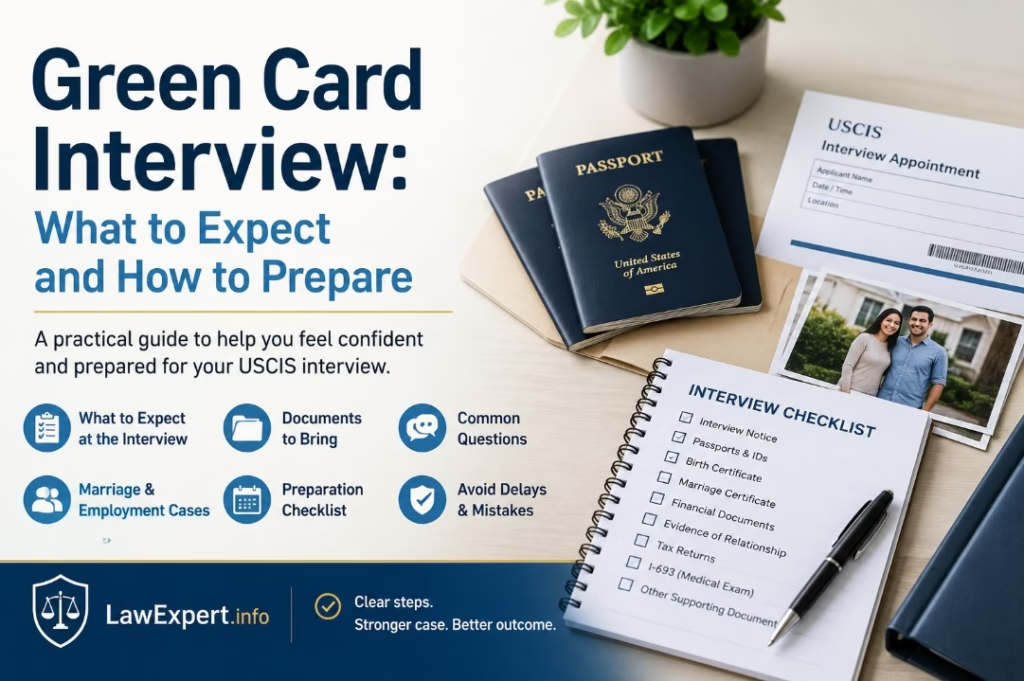
Final Green Card Interview Preparation Checklist
- Read the complete appointment notice.
- Confirm the date, time and field office.
- Determine who must attend.
- Review the full copy of every form filed.
- Check prior immigration applications and history.
- Prepare a timeline of addresses, jobs, travel and relationships.
- Identify and correct outdated information.
- Gather original identity and civil documents.
- Bring certified translations when required.
- Collect updated sponsorship and financial records.
- Organize relationship evidence for a marriage-based case.
- Prepare current employment evidence for an employment-based case.
- Review Form I-693 requirements.
- Obtain certified criminal records when applicable.
- Arrange an appropriate interpreter if needed.
- Confirm attorney representation and Form G-28 when applicable.
- Place documents in labeled sections.
- Plan transportation and security screening time.
- Answer honestly and avoid guessing.
- Keep copies of anything submitted at the interview.
The Bottom Line
A green card interview is an important opportunity for USCIS to verify the application, review eligibility and resolve unanswered questions. Applicants should prepare by reviewing the entire filing, organizing original and updated evidence and identifying possible legal problems before the appointment.
Marriage-based applicants should be ready to show a genuine shared life rather than recite memorized answers. Employment-based applicants should confirm that the offered position and immigration strategy remain consistent with the approved petition and applicable rules.
Honesty matters more than perfection. A forgotten minor detail can often be clarified, but guessing, hiding a material fact or presenting invented evidence can create much more serious consequences.
Useful sources
USCIS forms, filing procedures, interview policies and medical requirements can change. Check the current official instructions and your appointment notice before attending.
- USCIS Policy Manual — Adjustment of Status Interview Guidelines
- USCIS — Adjustment of Status
- USCIS — Form I-485, Application to Register Permanent Residence or Adjust Status
- USCIS — Form I-485 Initial Evidence Checklist
- USCIS — Form I-693, Immigration Medical Examination
- USCIS — Find a Designated Civil Surgeon
- USCIS Policy Manual — Spouses and Marriage-Based Petitions
- USCIS — Bringing a Spouse to Live in the United States
- USCIS Contact Center
This article is for general informational purposes only and is not legal advice. Immigration eligibility, interview procedures, required evidence and consequences of prior conduct depend on the applicant’s category, immigration history, documents and individual circumstances. USCIS forms and policies may change. If your case involves arrests, prior denials, immigration violations, inaccurate filings, removal proceedings, marriage concerns or possible inadmissibility, consider consulting a qualified immigration attorney before the interview.
Questions and answers
у своєму регіоні або по всьому світу
locally or worldwide