
Russian Kotleti Near Me: Where to Find Eastern European Cutlets, Cafes and Stores
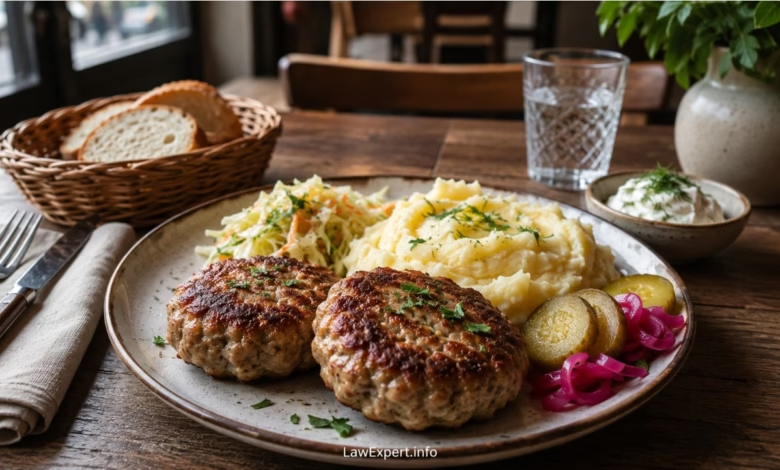
Searching for Russian kotleti near me usually means you want something specific: not just “a burger,” not just “meatballs,” and not just any chicken cutlet from a random lunch menu. You are probably looking for that Eastern European-style comfort food plate: tender pan-fried cutlets, creamy potatoes or buckwheat, pickles, cabbage salad, maybe a little sour cream or mushroom gravy on the side.
The tricky part is that kotleti are not always listed online as “kotleti.” A small cafe may call them homemade cutlets. A deli may sell them by weight at the prepared-food counter. A European grocery store may keep them frozen. A Ukrainian cafe, Polish market, Russian store, or Eastern European restaurant may serve something very close, even if the menu uses a different name.
This guide helps you search smarter, understand menu wording, compare local places, ask better questions before ordering, and avoid common problems with delivery, ingredients, freshness, allergens, pricing and prepared foods.
What kotleti are
Kotleti are Eastern European-style cutlets, usually made from ground meat, poultry, fish, or sometimes vegetables. The most familiar versions are made with beef, pork, chicken, turkey, or a mixed meat blend. They are shaped into patties, often oval rather than perfectly round, then pan-fried, baked, or finished in a sauce depending on the kitchen.
For many families, kotleti are everyday comfort food. They are not supposed to feel overly fancy. A good kotleta is tender inside, gently browned outside, and satisfying without trying too hard. The best plate usually depends as much on the sides as on the cutlets themselves: mashed potatoes, buckwheat, cabbage salad, cucumber-tomato salad, pickled vegetables, mushroom gravy, sour cream, or a simple fresh herb garnish.
Think of kotleti as home-style Eastern European cutlets made from ground ingredients, usually served as a main dish with sides. They are closer to family dinner food than fast food.
One reason people search for kotleti so specifically is nostalgia. For some, it is a dish from childhood. For others, it is something they tried at a cafe, family table, church event, local deli, or immigrant-owned grocery store and now want to find again. Either way, the search is not only about food. It is about finding a familiar kind of meal nearby.
Why they can be hard to find online
Kotleti can be surprisingly difficult to find through a simple search. Not because the dish is rare everywhere, but because local businesses describe it in many different ways. A restaurant may serve them only as a lunch special. A deli may have them in a hot-food case but not on the website. A grocery store may sell frozen kotleti with a label in another language. A cafe may call them “homemade chicken cutlets” instead of kotleti.
That is why searching only for Russian kotleti near me may miss good options. The dish appears across several Eastern European and post-Soviet food traditions. Ukrainian, Russian, Polish, Belarusian, Moldovan, Baltic, Jewish, Caucasus and Central Asian kitchens all have cutlets, patties or similar ground-meat dishes. The name, seasoning and sides may change, but the comfort-food logic is often close.
If a place does not use the word “kotleti” online, it may still serve the dish. Search by cuisine, business type, menu photos and review language, not only by one exact keyword.
This is especially true in smaller cities and suburbs. Large metro areas may have dedicated Russian restaurants or Ukrainian cafes. Smaller areas may have only one European grocery store, a Polish deli, or an international market with prepared foods. The best result may not be the most polished restaurant website. It may be a small local place with strong community word of mouth.
Where to search first
Start with the obvious tools: Google Maps, Apple Maps, Yelp, restaurant delivery apps, local food groups, and the websites or social pages of Eastern European stores. But do not stop after the first search result. Small family businesses are not always great at SEO, and many do not update online menus often.
When you search, think in layers.
Use “Russian kotleti near me,” “kotleti near me,” “chicken kotleti near me,” and “meat cutlets near me.” This catches businesses that mention the dish directly.
Try “Eastern European food near me,” “Russian restaurant near me,” “Ukrainian food near me,” “Polish deli near me,” and “European grocery near me.” Kotleti may be hidden inside a broader menu.
Look for delis, international groceries, prepared-food markets, hot bars, bakeries with lunch counters, and small cafes. Kotleti are often sold where people buy everyday food, not only where they book dinner reservations.
Customer photos often reveal dishes that menus do not list clearly. Search inside reviews for words like “cutlet,” “kotleti,” “kotleta,” “chicken patty,” “homemade,” “deli,” “Russian food,” “Ukrainian food,” and “lunch.”
If you live in an area with a large immigrant community, expand your search by neighborhood. A restaurant may be 20 minutes away but still be the best local option. In some cities, Eastern European food clusters around specific suburbs, markets, churches, bakeries or community centers rather than downtown dining districts.
Search terms that work better
The exact phrase matters, but flexible searching works better. Try different combinations based on what you actually want: a restaurant meal, a takeout order, a grocery store, frozen food, or a family-style prepared dinner.
- Russian kotleti near me
- Kotleti near me
- Chicken kotleti near me
- Meat cutlets near me
- Homemade cutlets near me
- Eastern European food near me
- Russian restaurant near me
- Ukrainian cafe near me
- European deli near me
- Russian store near me
- Ukrainian grocery near me
- Polish deli hot food near me
- European prepared foods near me
- Slavic food near me
If you are searching on a phone, try adding your city, county, or neighborhood. “Near me” is convenient, but it can miss places just outside your immediate radius. A more specific search like “Russian store Boca Raton,” “Ukrainian cafe Chicago suburbs,” or “Eastern European deli Brooklyn” can bring up better results.
Open a promising business profile and search inside its reviews. A dish may not appear on the official menu, but a customer may have written, “The kotleti were excellent,” or uploaded a photo of the prepared-food counter.
Also check recent photos. Kotleti are easy to recognize once you know what to look for: browned oval patties, usually served with potatoes, buckwheat, rice, salad, pickles, gravy, or sour cream. If the menu is vague but the photos show the dish, call and ask what it is called there.
Restaurants, delis and stores to check
Different places serve kotleti in different ways. Some offer a full restaurant plate. Some sell them cold or hot from a deli case. Some offer frozen trays. Some make them only on certain days.
Eastern European restaurants
This is the easiest place to begin. Russian, Ukrainian, Belarusian, Moldovan, Baltic and broader Eastern European restaurants may serve kotleti as a main dish. The best versions are often simple: cutlets, a starch, a salad, maybe a sauce. Do not judge only by fancy plating. Kotleti are supposed to feel generous and familiar.
Ukrainian cafes and bakeries
Ukrainian cafes may focus on borscht, varenyky, holubtsi, deruny, nalysnyky or baked goods, but many also serve cutlets as part of a lunch menu. If a cafe has prepared savory dishes, ask whether kotleti are available that day.
Russian and European grocery stores
Stores can be better than restaurants if you want a family dinner at home. Look for prepared-food counters, frozen sections and deli cases. Some stores sell kotleti by the piece, by the pound, or in trays.
Polish delis and markets
Polish delis may not use the word kotleti the same way, but they often sell cutlets, patties, schnitzel-style dishes, pork cutlets, ground-meat dishes and prepared sides that create a similar Eastern European comfort-food plate.
Georgian, Armenian and Central Asian restaurants
These restaurants may not be the first places people search for kotleti, but some menus include cutlets, lula-style ground-meat dishes, kebabs, home-style patties or lunch specials that satisfy a similar craving. The flavors may be different, but the family-table feeling can be close.
Community recommendations
Local community groups can be surprisingly useful. Search neighborhood Facebook groups, immigrant community forums, Reddit city threads and local food groups. Ask: “Where can I find good Eastern European kotleti or homemade meat cutlets?” You may get answers that never appear in formal search results.
What to order with kotleti
Kotleti are rarely the whole meal by themselves. The sides matter. A good plate usually needs something warm and filling, something fresh or acidic, and maybe a sauce.
- mashed potatoes;
- buckwheat kasha;
- rice;
- roasted potatoes;
- mushroom gravy;
- cabbage salad;
- cucumber and tomato salad;
- pickled cucumbers;
- sauerkraut;
- beet salad;
- carrot salad;
- sour cream-based sauces;
- fresh herbs.
If you want the most classic comfort plate, choose kotleti with mashed potatoes and pickles or cabbage salad. If you want something lighter, ask for salad instead of potatoes. If you want a very home-style Eastern European meal, choose buckwheat. Buckwheat is not glamorous, but with a good kotleta and a little sauce, it makes perfect sense.
Order one kotleti plate with two classic sides. That tells you more about the kitchen than ordering only the cutlets. A place that handles potatoes, salads, pickles and sauces well usually understands the cuisine better.
For a family order, mix textures. Kotleti plus mashed potatoes, cabbage salad, pickles and maybe a soup can feed different tastes without making the table feel heavy. If the restaurant also serves borscht, varenyky, pierogi, blintzes or stuffed cabbage, add one shared dish instead of ordering every person the same plate.
How to read reviews before you go
Reviews are useful, but only if you read them carefully. A five-star rating does not always mean the place has good kotleti. A lower-rated review may complain about service but still praise the prepared food. You are looking for signs that the kitchen makes fresh, home-style dishes and that customers actually return for them.
Search for review phrases like:
- homemade;
- fresh;
- prepared food;
- hot bar;
- comfort food;
- like my grandmother made;
- Eastern European lunch;
- good cutlets;
- chicken kotleti;
- meat patties;
- great deli;
- authentic;
- food sells out early.
Watch for warning signs too. If several recent reviews mention cold food, stale prepared dishes, unclear prices, wrong delivery orders, or staff who cannot answer ingredient questions, be careful. One bad review is not proof. A pattern is different.
Prepared food quality can change quickly when ownership, cooks, suppliers or staffing changes. Sort by newest reviews and check recent customer photos.
Photos often matter more than ratings. Look at the color of the cutlets, the sides, the packaging and whether the food looks freshly prepared. A simple customer photo can tell you more than a polished menu description.
Takeout and delivery tips
Kotleti can work well for takeout because they are sturdy and easy to reheat. Still, they can become dry, soggy or cold if packed poorly. Before ordering, check how the restaurant sells them and what comes with the plate.
- Are kotleti sold by plate, by piece, or by weight?
- Are sides included or separate?
- Does sauce or gravy come on the side?
- Can you add special instructions?
- How long is the estimated delivery time?
- Do recent reviews mention missing items?
- Are service fees and delivery fees clear before checkout?
- Does the menu say whether the food is fresh, frozen or reheated?
If you are ordering for several people, calling the restaurant can help. Ask whether kotleti are available fresh that day, how many pieces come in an order, and which sides travel best. This is especially useful with small delis or prepared-food counters where the online menu may be incomplete.
Ask for sauce, sour cream, gravy or dressing on the side. Kotleti usually reheat better when wet sides and sauces are packed separately.
If the order arrives wrong, cold, incomplete or different from the menu description, take photos before eating or throwing anything away. Save the receipt, app confirmation, menu screenshot and messages. Most problems are solved through customer service, but documentation helps if you need a refund, replacement or chargeback review.
Allergy and ingredient questions
Kotleti look simple, but the recipe can include more ingredients than expected. Many versions use breadcrumbs, soaked bread, milk, egg, onion, garlic, herbs, flour, semolina, butter, oil, or a mixed meat blend. Some kitchens use shared pans, shared fryers, shared preparation surfaces or sauces that contain flour or dairy.
If you have an allergy, do not guess based on appearance. Ask direct questions before ordering.
- Do the kotleti contain wheat, breadcrumbs, flour or semolina?
- Do they contain egg?
- Is milk, cream, butter or cheese used?
- Are they made with beef, pork, chicken, turkey, fish or mixed meat?
- Are they cooked in the same pan or fryer as fish or other allergens?
- Are sauces or gravies made with flour, dairy or broth?
- Are frozen kotleti packaged with a full ingredient list?
- Can staff check with the kitchen instead of guessing?
Do not rely on a vague answer like “it should be fine.” Ask the restaurant or store to confirm ingredients and cross-contact risks. If they cannot answer clearly, choose something safer.
For packaged frozen kotleti, read the label every time. Recipes and suppliers can change. If the label is not in English, ask store staff for help before buying.
Frozen kotleti and prepared-food counters
If you cannot find a restaurant serving kotleti nearby, a grocery store may solve the problem. Many Eastern European stores sell frozen kotleti, prepared cutlets, meat patties, fish cutlets or deli trays. This can be a good option for quick family dinners.
When buying frozen or prepared kotleti, check:
- ingredient list;
- meat type;
- expiration date;
- storage instructions;
- whether they are raw, partially cooked or fully cooked;
- reheating instructions;
- allergen information;
- whether the package is sealed properly;
- whether the freezer or deli case looks well maintained.
Food safety is especially important with ground meat because ingredients are mixed together before cooking. If kotleti are raw or partially cooked, treat them carefully, cook them fully and avoid cross-contamination. If they are fully cooked, store them properly and reheat them safely before serving.
If you buy kotleti from a deli case or hot bar, ask when they were made and how they should be stored. Food that looks homemade can still create problems if it sits too long at unsafe temperatures.
Leftovers can be useful, but they need proper storage. As a practical rule, do not leave cooked food sitting out for hours after a meal. Cool it, refrigerate it promptly, and reheat it safely before serving again.
Consumer tips before you pay
Because this is a practical community guide, it is worth thinking like a careful consumer before ordering from a restaurant, deli, grocery store or delivery app. Most meals go fine. Problems happen when prices are unclear, menu descriptions are vague, items are missing, or allergy information is handled casually.
Before paying, check:
- the final price before tax, delivery fees and service charges;
- whether sides are included or sold separately;
- whether the dish is fresh, frozen, raw or fully cooked;
- whether the order is by piece, by pound or by plate;
- refund or replacement policy for wrong items;
- delivery app support rules;
- allergen information if relevant;
- photos or receipts in case something is wrong.
Take photos before eating or throwing anything away. Save the receipt, app confirmation, menu description and messages. Then contact the restaurant or delivery platform quickly and clearly explain what is missing or incorrect.
This does not mean every small mistake becomes a legal issue. Most food problems are solved through customer service. But clear documentation helps if you need a refund, replacement, chargeback review or complaint.
Useful sources
For food safety, allergen information and consumer questions, check current official sources before making decisions. Restaurant practices, delivery platform policies and consumer protections may vary.
This article is for general informational purposes only. It is not legal advice, medical advice, nutrition advice or a restaurant endorsement. Food ingredients, preparation methods, allergen risks, refund policies, delivery rules and consumer rights can vary by restaurant, store, delivery platform, state and individual situation. If you have a serious allergy, medical condition, food safety concern, payment dispute or legal problem, consider contacting the appropriate professional, agency or qualified attorney.
Questions and answers
What are Russian kotleti?
Russian kotleti are Eastern European-style cutlets, usually made from ground meat, poultry, fish or sometimes vegetables. They are shaped into patties and often served with mashed potatoes, buckwheat, salad, pickles or gravy.
How do I find Russian kotleti near me?
Start with searches like “Russian kotleti near me,” “kotleti near me,” “Eastern European food near me,” “Russian restaurant near me,” “Ukrainian cafe near me,” and “European deli near me.” Then check photos, recent reviews, prepared-food menus and grocery store hot bars.
Why can’t I find kotleti on restaurant menus?
Some restaurants translate kotleti as meat cutlets, chicken cutlets, homemade cutlets, meat patties or lunch specials. Small delis and grocery stores may sell them at the counter without listing every dish online.
Are kotleti the same as American chicken cutlets?
Not always. In many American menus, chicken cutlet means a thin sliced piece of breaded chicken. Eastern European kotleti are usually made from ground meat shaped into patties. If the menu is unclear, ask whether the cutlets are ground-meat patties or sliced breaded cutlets.
Where are kotleti usually sold?
You may find kotleti in Russian restaurants, Ukrainian cafes, Eastern European delis, Polish markets, international grocery stores, prepared-food counters, frozen food sections and small family-owned cafes with lunch specials.
What should I order with kotleti?
Classic sides include mashed potatoes, buckwheat, rice, cabbage salad, cucumber-tomato salad, pickles, beet salad, mushroom gravy or sour cream-based sauces. For a first order, kotleti with mashed potatoes and a fresh or pickled side is a reliable choice.
Can kotleti contain allergens?
Yes. Kotleti may contain wheat, breadcrumbs, egg, milk, butter, soy, sesame, fish or other allergens depending on the recipe. If you have a food allergy, ask the restaurant or store to confirm ingredients and cross-contact risks before ordering.
Are frozen kotleti a good option?
Frozen kotleti can be a good option if no restaurant nearby serves them fresh. Check whether they are raw, partially cooked or fully cooked, read the ingredient list, follow storage instructions and cook or reheat them safely.
What should I do if my kotleti delivery order is wrong?
Take photos, save the receipt, keep the app confirmation and contact the restaurant or delivery platform quickly. Explain what was missing, incorrect, cold or different from the menu description. Documentation helps if you need a refund, replacement or further review.
Is this article legal advice?
No. This guide is general information about finding and ordering kotleti, with practical consumer and food safety notes. It is not legal, medical or nutrition advice.
у своєму регіоні або по всьому світу
locally or worldwide