
Restaurant Consumer Rights: What to Do About Overcharges, Bad Service and Refund Problems
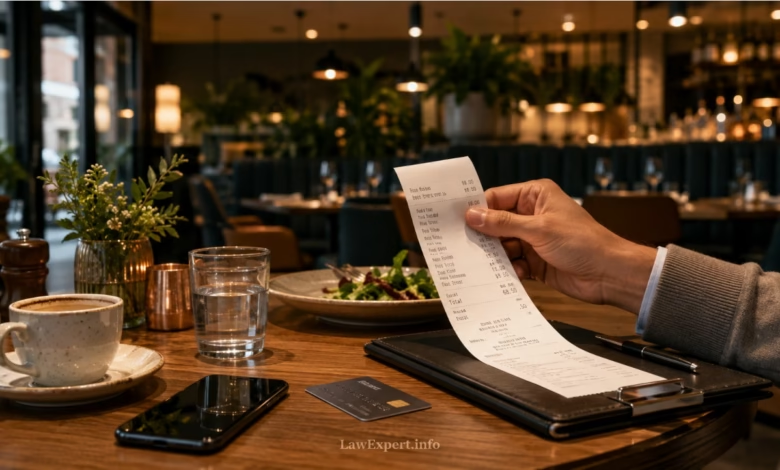
Restaurant problems are awkward because they happen in real time. You are sitting at a table, the bill arrives, and something feels wrong: a dish you did not order, a service fee you did not expect, a discount that disappeared, a tip added twice, or a manager who says “that’s just our policy” without explaining anything.
If you are looking up restaurant consumer rights, the first thing to understand is that not every disappointing meal automatically creates a legal claim or refund right. Bad service, slow food, or a meal you simply did not enjoy is different from being overcharged, billed for something you did not receive, misled about a price, served food that raises a safety concern, or denied a promised refund.
This guide explains what to check before paying, how to handle overcharges, when to ask for a refund or correction, how to document the issue, what to do if a restaurant refuses to help, and when a credit card dispute or consumer complaint may be worth considering.
What restaurant consumer rights usually mean
Restaurant consumer rights are not one single rule that applies the same way everywhere. Your options can depend on state law, local rules, the restaurant’s posted policies, how the price was shown, what you ordered, what you received, how you paid, and whether the issue involves food safety, billing, discrimination, accessibility, misleading advertising or a normal service complaint.
For everyday restaurant problems, the most common consumer issues are practical:
- being charged for an item you did not order;
- being charged a different price than the menu showed;
- not receiving an item you paid for;
- being charged twice;
- a coupon, gift card or promotion not being applied as promised;
- unexpected service fees, surcharges or automatic gratuities;
- a takeout or delivery order that is wrong or incomplete;
- food that appears unsafe or contaminated;
- allergy instructions that were ignored;
- a refund promised by staff but never processed.
A restaurant problem is stronger when it is specific and provable: wrong charge, missing item, duplicate payment, misleading price, unsafe food concern or broken promise. “I did not like the meal” is usually harder to turn into a refund request.
That does not mean service quality never matters. A restaurant may voluntarily comp a dish, offer a discount, remake food, remove a charge or issue a credit because the experience was poor. But voluntary customer service is not the same as a clear legal right to a full refund.
What to check before paying the bill
The best time to fix a restaurant bill problem is before you pay. Once the payment is processed, the issue may still be fixable, but it often becomes more annoying. You may need a manager, a void, a refund transaction, a receipt correction, or a later card dispute.
Before paying, check:
- each food and drink item on the bill;
- the price of each item compared with the menu;
- whether any item appears twice;
- whether items you sent back were removed or adjusted;
- whether discounts, coupons or promotions were applied;
- whether service fees or surcharges were added;
- whether automatic gratuity was added;
- whether tax appears reasonable for your area;
- whether the tip line is separate from any automatic gratuity;
- whether the final card charge matches the signed receipt.
Many restaurant disputes begin because a customer signs quickly, notices the extra charge later, and then has to reconstruct what happened. Take one minute to review the bill while you are still there.
If something looks wrong, ask calmly before paying. A server may have selected the wrong item, forgotten to remove a dish, applied the wrong table number, or missed a promotion. Many billing issues are mistakes, not scams. Still, you should not pay a bill you do not understand without asking.
Restaurant overcharges and billing mistakes
An overcharge happens when you are charged more than you should have been charged. It can be a simple mistake, a confusing policy, a menu mismatch, or a more serious billing problem. The first step is to identify the type of overcharge.
Common restaurant overcharges include:
- an item you did not order;
- an item charged twice;
- a higher price than the menu showed;
- a happy hour or lunch special not applied;
- a coupon or promotion not honored;
- automatic gratuity not clearly noticed before you added another tip;
- a credit card surcharge not clearly disclosed;
- a service fee that was not explained;
- a wrong table’s item added to your check;
- a final card charge higher than the receipt you signed.
If you catch the issue at the restaurant, ask for a corrected bill. If you notice it after leaving, call or email the restaurant with the receipt, date, time, amount, and a short explanation. If you paid by card, compare the signed receipt with the posted charge after it clears.
Instead of saying “You ripped me off,” say: “My receipt shows I was charged for two desserts, but we ordered one. Could you please review the check and refund the extra charge?”
A clear, polite request with proof usually works better than a dramatic complaint. If the restaurant agrees there was an error, ask whether the correction will be a void, refund, credit or adjustment to the card transaction.
Service fees, tips, surcharges and unclear charges
Restaurant fees can be confusing. A bill may include a service charge, automatic gratuity, credit card surcharge, kitchen appreciation fee, delivery fee, packaging fee, large-party fee, resort or venue fee, or local charge. The problem is not always the existence of a fee. The problem is whether the fee was disclosed clearly enough and whether the final amount matches what you agreed to pay.
When you see an extra fee, ask:
- Was the fee shown on the menu?
- Was it disclosed before ordering?
- Is it mandatory or optional?
- Does it go to staff, the restaurant, the platform, or another party?
- Is automatic gratuity already included?
- Is the tip line asking for an additional tip?
- Was a credit card surcharge disclosed before payment?
- Does the final total match the posted or agreed price?
If automatic gratuity is already included, do not assume the tip line means no tip was added. Read the itemized bill carefully before adding another amount.
Some fees may be lawful if properly disclosed, while hidden or misleading fees may raise consumer concerns. Rules can vary by state and by the specific type of fee. If the amount is small, the simplest solution may be asking the manager to explain or correct the bill. If the pattern is repeated or the charge is significant, save the receipt and consider a formal complaint.
Bad service vs. a real consumer problem
Bad service is frustrating. Long waits, rude staff, forgotten drinks, cold entrées, rushed seating, slow checks and messy tables can ruin a meal. But from a consumer-rights perspective, bad service is not always the same as an overcharge, failed delivery, unsafe food issue or billing error.
Think of restaurant problems in three levels.
The experience was unpleasant, but you received what you ordered and the bill is accurate. Examples include slow service, a noisy table, or food that was not as tasty as expected.
Something went wrong that the restaurant can fix immediately. Examples include the wrong side dish, undercooked food, a missing drink, or a charge that should be removed.
The issue involves billing, misleading pricing, duplicate charges, ignored allergy instructions, unsafe food, a serious illness concern, or a refusal to correct a clear mistake.
If the problem is service quality, ask for a manager while you are still there. A restaurant may offer a remake, discount, dessert, coupon or apology. If the issue is billing or safety, focus less on feelings and more on facts.
For bad service, ask for a manager. For a wrong charge, ask for a corrected bill. For unsafe food or allergy concerns, document carefully and take the issue more seriously.
When to ask for a refund, correction or replacement
In restaurant situations, the right remedy depends on what happened. A full refund is not always realistic or fair. A partial refund, corrected bill, replacement dish, removed item, store credit or manager adjustment may fit the problem better.
Possible remedies include:
- Corrected bill: useful when the wrong item or price appears before payment.
- Removed charge: common when an item was never received or was sent back for a valid reason.
- Replacement dish: useful when the kitchen made the wrong item and you still want to eat.
- Partial refund: reasonable when only part of the order was wrong.
- Full refund: more realistic when the entire order was unusable, never provided, or materially different.
- Restaurant credit: sometimes offered as a customer-service resolution.
- Card refund: may be needed if the charge already posted and the restaurant agrees to reverse it.
Ask for the remedy that matches the facts. If one appetizer was missing from a takeout order, ask for that item to be refunded. If the entire order was delivered to the wrong address and you never received it, a full refund is more reasonable.
A targeted request often works better than demanding everything back. Explain what was wrong, show proof, and ask for the specific correction you want.
If the restaurant promises a refund, ask when it will be processed and how it will appear. Card refunds may not show instantly. Save the manager’s name, receipt and written confirmation if available.
Food safety, allergies and serious concerns
Food safety and allergy problems are different from ordinary service complaints. If food appears spoiled, contaminated, undercooked in a risky way, contains a foreign object, or ignores a serious allergy instruction, treat the situation carefully.
Steps to consider:
- do not continue eating food that appears unsafe;
- take photos of the food, packaging and receipt;
- write down the date, time, restaurant location and what you ate;
- save the menu description and allergy instruction, if relevant;
- contact the restaurant promptly;
- seek medical help if symptoms are serious or allergy-related;
- consider contacting a local health department for serious food safety concerns.
If you have a serious allergy, vague statements like “it should be fine” are not enough. Ask direct ingredient and cross-contact questions before ordering, especially with sauces, fried foods, bakery items, dumplings, soups, cutlets and prepared foods.
If you become ill after a meal, avoid jumping to conclusions without medical guidance. Many illnesses can have different causes. But it is still smart to document what you ate, when symptoms began, whether others became sick, and whether you reported the concern.
What evidence to save
Evidence is what turns a complaint from “I remember something was wrong” into a clear request the restaurant, payment provider or consumer office can review. You do not need a huge file for every small issue, but you should save enough proof to explain the problem.
Save these items when relevant:
- itemized receipt;
- signed credit card receipt;
- menu photo or screenshot;
- advertised price or promotion;
- photos of the food or packaging;
- takeout or delivery order confirmation;
- messages with the restaurant or delivery platform;
- manager’s name or written response;
- credit card charge after it posts;
- refund promise or denial;
- notes about date, time and location.
If the issue is an overcharge, keep the receipt and compare it with your card statement. If the issue is a menu description, save a photo or screenshot of the menu. If the issue is unsafe food, take photos before throwing anything away.
Take a photo of the itemized receipt before leaving the restaurant. If the paper receipt disappears later, you still have the details.
When a payment dispute may be considered
A payment dispute should not be your first move for every restaurant complaint. Start with the restaurant when possible. Many problems can be corrected by a manager. But if you were charged incorrectly, charged twice, charged for something you did not receive, or the restaurant refuses to address a documented billing issue, you may consider contacting your card issuer.
Before disputing a charge, prepare:
- the itemized restaurant receipt;
- the signed receipt or final checkout screen;
- your card statement showing the charge;
- photos or screenshots supporting the issue;
- records of your attempt to resolve the problem with the restaurant;
- any written refund denial or manager response.
Be accurate. A meal you disliked is not the same as a charge for food you never received. A small missing side is not always grounds to dispute the entire bill. A credit card dispute is a billing process, not a way to punish a restaurant for poor service.
False or exaggerated payment disputes can create problems with the restaurant, delivery platform, payment account or card issuer. Keep the claim truthful and limited to what the evidence supports.
If you paid with a debit card, gift card, restaurant credit, cash or third-party app balance, your options may differ. Check the payment method’s rules.
Where to complain if the restaurant will not help
If the restaurant refuses to correct a clear issue, your next step depends on the problem. A small service complaint may not justify a formal report. But repeated billing issues, misleading charges, unsafe food concerns or serious unresolved disputes may require escalation.
Possible complaint paths include:
- restaurant manager or owner;
- corporate customer service, if it is a chain;
- delivery platform support, if ordered through an app;
- payment card issuer for billing disputes;
- local health department for food safety concerns;
- state consumer protection office for business complaints;
- federal consumer complaint resources when appropriate.
When filing any complaint, use a simple timeline. Include the date, restaurant name, location, order details, what happened, what you asked for, what response you received, and what documents or photos support your position.
Keep it short, factual and chronological. A reviewer should be able to understand the issue in one minute.
A complaint does not guarantee a refund. It creates a record and may help route the issue to the right business, agency or payment process.
Takeout and delivery restaurant problems
Takeout and delivery create extra confusion because the customer may not notice the problem until after leaving the restaurant or receiving the delivery. The food may be wrong, missing, cold, damaged, mislabeled, overcharged or packed with unclear ingredients.
If your problem involves delivery, read our detailed guide to food delivery refund rights. For restaurant consumer issues generally, the key idea is the same: document quickly, contact the right party, and make a specific request.
For takeout, check the bag before leaving if possible. For delivery, check the order before eating. If something is wrong, take photos of the food, packaging, receipt and order screen.
Before leaving the restaurant, quickly confirm the number of containers, drinks, sauces and sides. It is easier to fix a missing item at the counter than from home.
This is especially important for local delis, international cafes and prepared-food counters where dishes may be sold by weight, by piece or by plate. If you are ordering broader regional food, our Eastern European food near me guide explains how to compare cafes, delis, grocery stores and prepared-food menus before ordering.
Simple complaint message templates
A good restaurant complaint does not need to sound legal. It needs to be clear. Use short messages that explain what happened, what proof you have, and what you want.
Overcharge
Hello, I visited your restaurant on [date] and my receipt shows I was charged for [item/amount]. I believe this is incorrect because [reason]. I attached the receipt and would appreciate a correction or refund of the overcharge.
Wrong item
Hello, I ordered [ordered item], but I received [wrong item]. I noticed the issue after [dining/takeout/delivery]. I attached photos and the receipt. Please let me know whether you can replace the item or refund the incorrect charge.
Duplicate charge
Hello, my card appears to have been charged twice for the same restaurant visit/order on [date]. I attached the receipt and card charge screenshots. Please review and refund the duplicate charge if confirmed.
Refund promised but not received
Hello, I was told on [date] that a refund of [amount] would be processed for [reason]. I have not seen the refund yet. Could you please confirm the refund status and expected processing time?
If you speak with a manager by phone, follow up in writing if the issue is significant. A short written record helps prevent confusion later.
Useful sources
For consumer complaints, refund issues, online purchases, billing disputes and credit card charge questions, check current official sources. Rules and options may vary by state, restaurant, payment method, platform policy and individual facts.
This article is for general informational purposes only and is not legal advice. Restaurant refund options, service fee rules, billing dispute rights, food safety procedures, consumer complaint options and chargeback rules can vary by state, restaurant, payment method, platform policy and individual facts. If your issue involves a serious allergy, illness, unsafe food, a large financial loss, repeated billing problem, discrimination concern or legal dispute, consider contacting the appropriate agency, payment provider, health department or a qualified attorney.
Questions and answers
What are restaurant consumer rights?
Restaurant consumer rights usually involve fair billing, clear pricing, receiving what you paid for, accurate charges, safe food handling, and access to complaint options when a business will not correct a documented problem. Exact rights can vary by state and situation.
Can I get a refund for bad service at a restaurant?
Bad service alone does not always create a right to a refund. A restaurant may voluntarily offer a discount, replacement or credit, but refund requests are stronger when there is a specific problem such as an overcharge, wrong item, missing item, unsafe food concern or broken promise.
What should I do if a restaurant overcharged me?
Ask for a corrected bill before paying if you notice the issue at the restaurant. If you notice later, contact the restaurant with the receipt, date, amount and explanation. Save your itemized receipt and compare it with your card statement.
Are restaurant service fees legal?
Service fee rules can vary by state and by the way the fee is disclosed. A fee may be allowed if it is clearly disclosed, but hidden, misleading or unclear charges can raise consumer concerns. Always review the menu and itemized bill before paying.
What if automatic gratuity was added and I tipped again?
Check the itemized receipt. If automatic gratuity was already included and you added another tip by mistake, contact the restaurant quickly. Whether they adjust it may depend on the facts, timing and restaurant policy.
Can I dispute a restaurant charge with my credit card?
A credit card dispute may be considered if you were charged incorrectly, charged twice, or charged for something you did not receive and the restaurant will not resolve it. It should be truthful, documented and limited to the actual billing issue.
What evidence should I save for a restaurant complaint?
Save the itemized receipt, signed receipt, menu photo or screenshot, card charge, photos of the food or packaging, messages with the restaurant, manager responses and any refund promise or denial.
What should I do if a restaurant served unsafe food?
Stop eating the food, take photos, save the receipt, write down the date and location, and contact the restaurant. If the issue is serious or involves illness, contamination or allergy risk, consider contacting a local health department and seeking medical help if needed.
Where can I complain about a restaurant that will not fix a problem?
Depending on the issue, you may contact the restaurant owner, corporate office, delivery platform, payment card issuer, local health department, state consumer protection office or other appropriate consumer complaint resource.
Is this article legal advice?
No. This guide provides general consumer information about restaurant overcharges, refund problems, service issues and billing disputes. It is not legal advice.
у своєму регіоні або по всьому світу
locally or worldwide